Skip to content

Actions Leaders Can Take Now for Responsible AI

Recent findings reveal a stark reality: 36% of AI researchers warn of catastrophic risks from uncontrolled AI development. As someone who has led technology teams through multiple waves of disruption, I've observed that companies typically approach AI adoption in one of two ways: either reactively scrambling to catch up or strategically integrating AI as a competitive advantage. The difference between these approaches isn't just technical capability—it's a fundamental understanding that responsible AI implementation is the only sustainable path forward. With AI, the winners won't simply be first-to-market—they'll be first-to-trust. For CTOs and technology leaders, implementing responsible AI isn't just about avoiding risks—it's a strategic advantage that creates lasting value while protecting your organization's future. While many view this as compliance overhead, robust governance now builds the foundation for competitive differentiation as enterprise customers increasingly audit AI vendors' ethical practices.

Pradeepa Dhanasekar3 min read
Listen · AI-generated audio
00:00--:--

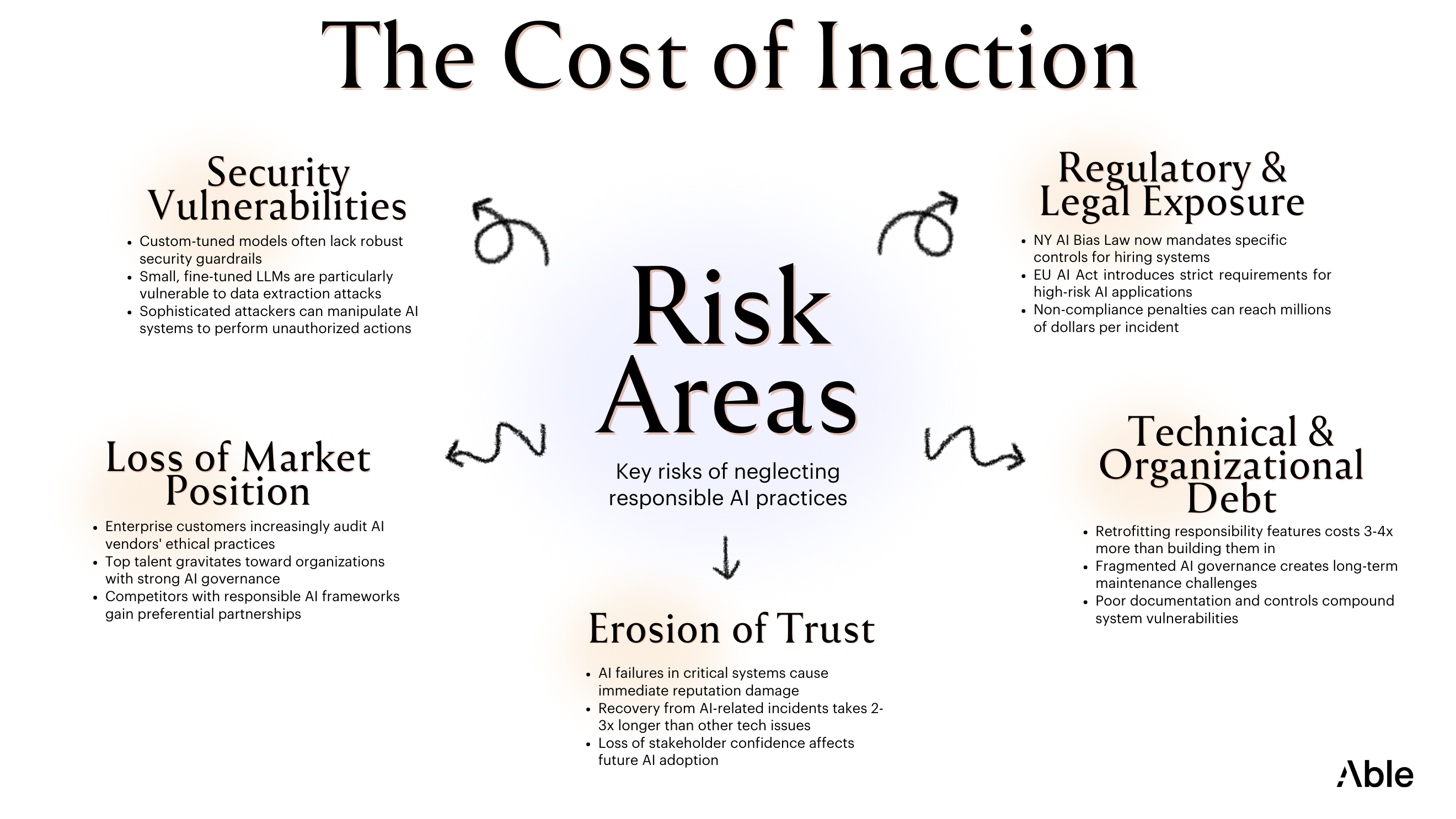
The Cost of Inaction

Making it Happen

The five action areas outlined below represent the minimum viable governance needed to navigate both current and future AI landscapes without sacrificing innovation velocity, ultimately creating sustainable business value.

1. Design Human-Centered Governance

Move beyond technical solutions to build governance that puts human values first.

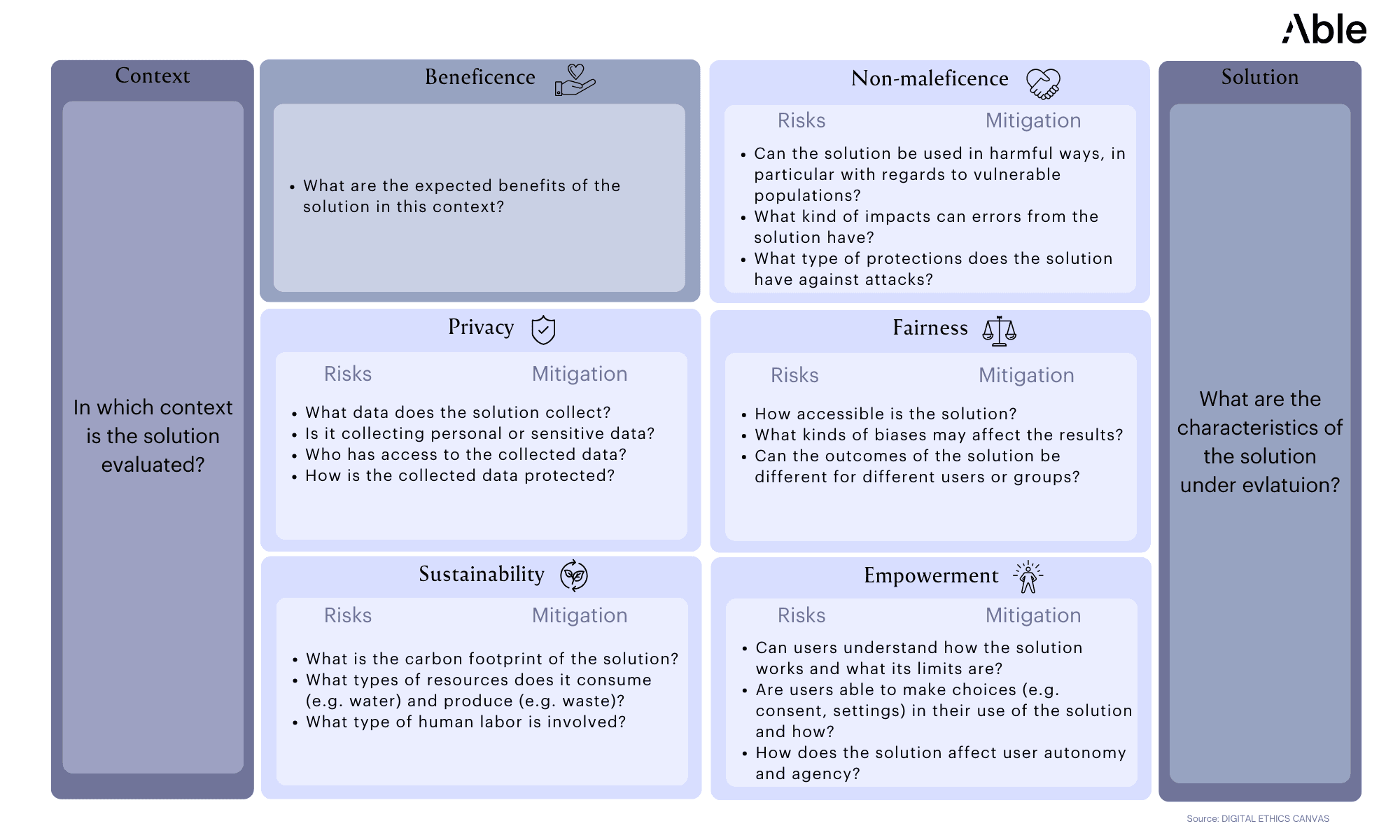
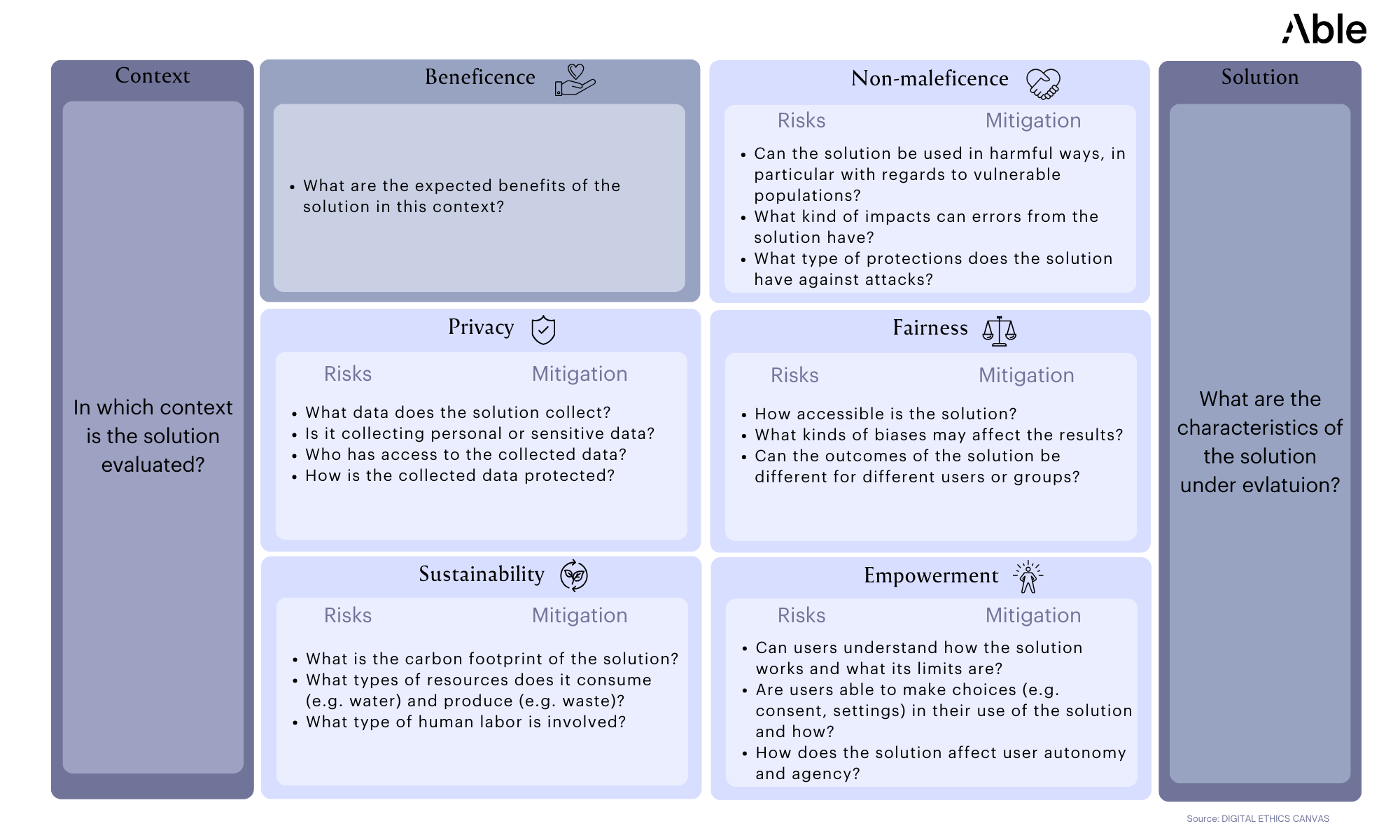
  • Use the Values Canvas framework to map ethical considerations
  • Establish AI ethics committees with cross-functional representation
  • Define which steps and decisions are human-controlled versus AI-controlled, with explicit escalation paths between them to maintain appropriate oversight and accountability.
  • Transform compliance policies into agentic workflows (e.g., HIPAA agent)
  • Convert regulations into step-by-step processes
  • Auto-assign tasks based on team expertise
  • Generate multi-framework risk assessments
  • Track compliance status in real-time
    AI Values Canvas Framework

2. Build Evaluation Excellence

Implement comprehensive testing that balances capabilities with responsibility

  • Deploy automated testing for technical performance
  • Conduct regular alignment evaluations for ethical concerns
  • Create risk assessment frameworks specific to AI deployments
  • Establish clear thresholds for deployment decisions

3. Create a Culture of Responsibility

Foster an environment where responsible AI is everyone's priority

  • Launch "AI Ethics Champions" program across disciplines
  • Develop practical AI ethics training for different roles
  • Build communities of practice around responsible AI
  • Partner with academic institutions for ongoing research

4. Implement Proactive Safeguards

Move beyond reactive security to build preventive measures

  • Conduct benchmarks against known safety and bias prevention datasets
  • Create AI-specific security monitoring systems
  • Establish clear protocols for model access and deployment
  • Develop incident response plans for AI-specific scenarios
  • Regular security assessments of AI infrastructure

5. Drive Transparent Operations

Make responsible AI visible and measurable throughout your organization

  • Create dashboards tracking ethical AI metrics
  • Establish regular reporting on AI impact
  • Share lessons learned across teams
  • Maintain open communication with stakeholders

The move toward responsible AI isn't just an ethical imperative—it's a strategic necessity that will define market leaders in the coming years. While the tasks may seem daunting, successful implementation doesn't require a complete organizational overhaul. It begins with small, deliberate steps that build momentum over time.

Remember to build Responsibly, Safely, and Securely. It matters!

Keep reading

  • AI Agents Explained: A CTO's Guide to Making Smart Decisions (and Explaining Them to Your Board)

    Generative AI · CTO · Mid-market Orgs

    As a CTO, the AI boom brings new terminology that's both exciting and overwhelming. When it's your job to explain these complex ideas to your leadership team or board, who aren't in the tech trenches daily, the challenge grows.

    Arnon Bruno V. Santos
  • Demystifying AI in the SDLC: Practical Steps for Mid-Market CTOs

    CTO · Mid-market Orgs · SDLC

    In today's fast-paced digital landscape, mid-market companies are under immense pressure to innovate and deliver software faster than ever before. The promise of AI to revolutionize the Software Development Lifecycle (SDLC) is undeniable—unlocking unprecedented speed, efficiency, and quality. However, many mid-market CTOs feel overwhelmed by the complexities of AI adoption. Where do they even begin? According to a recent report, the global AI market in software development is projected to grow from $184 billion in 2024 to $266 billion by 2025[1], highlighting the urgency for companies to adapt.

    Jose Rodriguez
  • The Rise of Vertical AI and the Value of Efficient Domain Models

    Generative AI · CTO · Mid-market Orgs

    Discover how vertical AI and efficient domain models are revolutionizing mid-market companies by streamlining development, reducing costs, and delivering accurate, industry-specific insights.

    Michelle Yi
Able
Menu